Stimulating multidisciplinary discussions
EMUC26 introduces a refreshed vision for its scientific programme this year. Developed by the new EMUC Steering Committee, the programme topics have been defined by track leaders to address real clinical dilemmas, scientific innovations, and the multidisciplinary decision‑making required in modern cancer care. Taking place in Brussels (BE) from 5-8 November 2026, the congress brings together specialists across the genitourinary (GU) oncology spectrum. This article is part one of a series offering an inside look at the scientific programme.
Localised urothelial cancer
The management of localised urothelial cancer is rapidly evolving, and as track lead, Prof. Morgan Rouprêt (FR) is looking forward to exploring these developments at EMUC26. He notes, “Until recently, radical surgery represented the cornerstone of treatment, but we are now entering an era in which bladder preservation, precision imaging, molecular biomarkers and novel systemic therapies are reshaping clinical decision-making.”
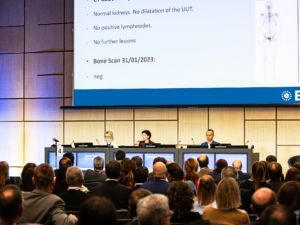
“The urothelial cancer plenary session has therefore been built around several of the most controversial questions that clinicians are facing today. Is BCG alone still sufficient for patients with high-risk NMIBC in the era of novel intravesical therapies? Can modern imaging reduce our reliance on TURBT for staging? Is ctDNA ready to guide adjuvant treatment decisions after radical cystectomy? And finally, are we moving towards a future in which surgery, radiotherapy, and systemic therapy will be selected according to individual patient and tumour characteristics rather than following a ‘one-size-fits-all’ approach?”
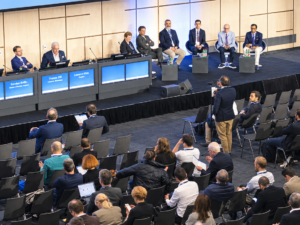
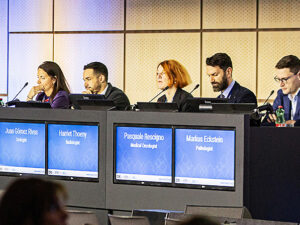
According to Prof. Rouprêt, “Rather than providing definitive answers, the plenary session is designed to stimulate multidisciplinary discussion between urologists, medical oncologists and radiation oncologists, bringing together internationally recognised experts with different perspectives. By debating real clinical cases, we hope to provide delegates with practical insights into how these emerging data may influence everyday clinical practice over the coming years.”
Muscle-invasive bladder cancer
Prof. Günter Niegisch: “The plenary session on muscle-invasive bladder cancer (MIBC) is dedicated to current therapies and treatment innovations with several rapid-fire debates. A clinical case presentation will anchor the session, guiding discussion on biomarker‑driven therapeutic choices. Given the high demand for novel bladder preserving strategies that avoid both surgery and radiotherapy, a multidisciplinary debate will focus specifically on this issue.”
According to Prof. Niegisch, “A distinctive feature of the session is the involvement of patient speakers, who will share their perspectives so that diagnostic and therapeutic decisions can be considered not only from the clinician’s viewpoint, but also from the patient’s experience.”
Genetics & AI
The lecture ‘My treatment algorithm for advanced prostate cancer’ will be presented by Dr. Niven Mehra (NL). As the genetics track lead, he is also particularly looking forward to the sessions ‘AI in the clinic and in literature review: what clinicians must know (and must never delegate)’ and ‘AI-supported imaging and pathology in GU cancers: ready for prime time?’.
Another feature he highlights is the discussion on ‘Germline-somatic interplay: what matters clinically?’. This presentation will cover the clinical significance of germline carriers of cancer predisposition genes in homologous recombination repair (HRR) pathway, Lynch syndrome, as well as implications of biallelic loss in a tumour, homologous recombination deficiency (HRD) phenotype, and treatment selection.
Cancer survivorship
Medical oncologist Prof. Alicia Morgans (US), highlights what attendees can expect from the cancer survivorship plenary session. “International experts will debate some of today’s most challenging clinical decision points. These debates include the timing of treatment initiation in non-curative settings (holding off until necessary versus starting as soon as possible); and whether patients with MIBC should preferentially receive bladder-sparing tri-modality treatment or proceed directly with cystectomy.”
“Complex cases to be discussed include considerations for older patients receiving radiation and systemic therapy for prostate cancer (how intense should it be, and for how long?), as well as whether kidney cancer survivors should continue systemic therapy or incorporate treatment breaks.”
Prof. Morgans added that the plenary session will explore aspects of GU cancer survivorship that are often less visible, such as sexual health impacts and the psychological burden carried by survivors. “These discussions aim to ensure that we keep patients’ needs in mind, even when solutions are not straightforward. Today’s GU cancer survivors are living longer, and this session is designed to help us ensure they are living better.”
New to EMUC this year
A ‘Meet the Professor’ session will take place on Saturday 7 November (10:15-12:15). This is an exclusive educational opportunity designed for early-career clinicians with a strong interest in GU oncology. Led by renowned European GU cancer experts, successful applicants will join an interactive, case‑based learning session in a small‑group format. Case discussions will cover localised and advanced/metastatic prostate and renal cancers, non–muscle invasive and muscle invasive bladder cancer, testicular and penile cancer, and GU cancer survivorship. Applications are open until Monday, 31 August. See how to apply.
——-
Important dates
- Abstract submission is open until 1 August 2026
- You can benefit from the early registration savings if you register by 6 August 2026