The evolving role of AI: To augment or replace clinicians?
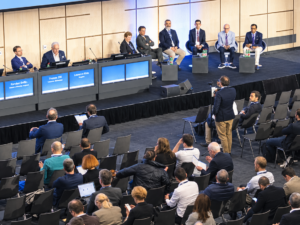
“AI will enhance the efficiency of clinicians rather than replace them” was one of the overarching messages of Plenary Session 3 “The evolving role of artificial intelligence (AI)” of the EAU Section of Urological Imaging programme chaired by urologists Dr. Enrico Checcucci (IT) and Dr. Javier Perez Ardavin (ES).
According to the presentation “The new era of AI: the multi-agentic AI” by radiologist Prof. Anwar Padhani (GB), the future is “a tireless, evidence-based digital multidisciplinary team with a human in the chair.” AI will aid in terms of efficiency (e.g., preparing complex cases by consolidating information before clinicians evaluate); quality as expert-level planning becomes standard practice beyond expert centres; and humanity as the patients’ values become an integral part of the decision-making process rather than an afterthought.
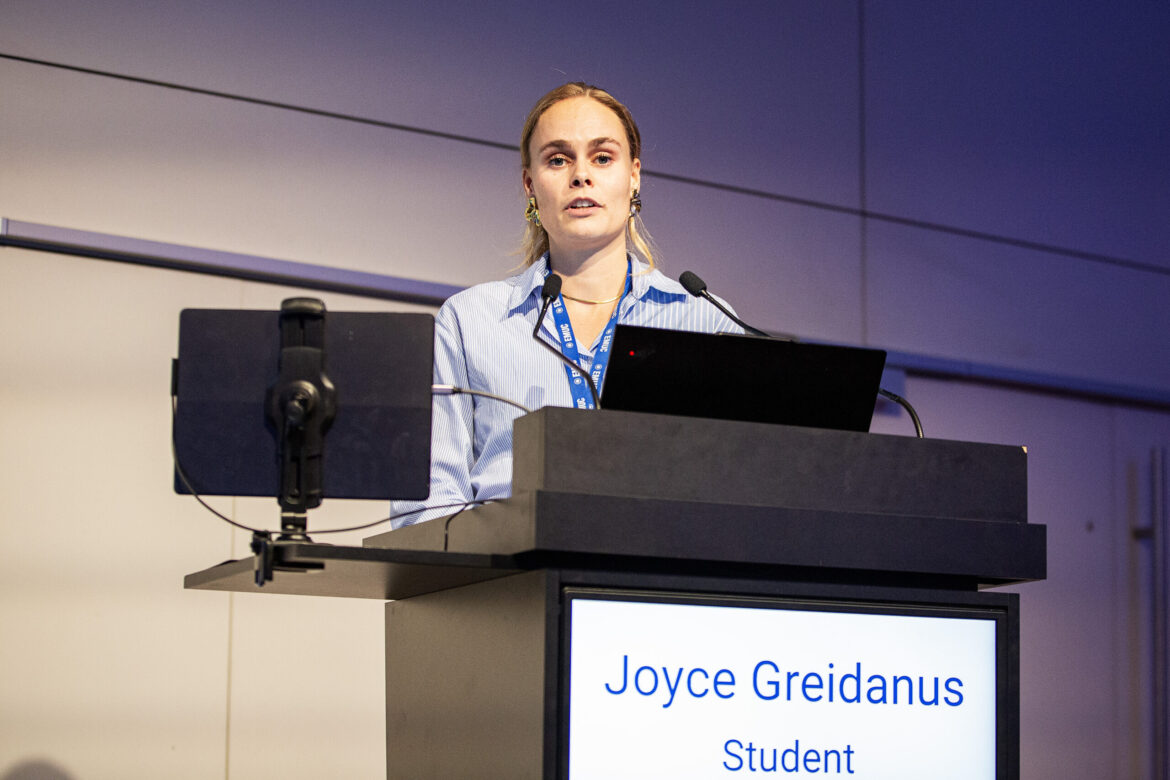
The session also covered new diagnostic tools driven by AI. Ms. Joyce Greidanus (NL) presented “AI-driven cystoscopy for bladder cancer” and stated that AI-assisted cystoscopy shows promise for detecting small lesions that might otherwise be missed. Its use for transurethral resection of bladder tumour (TURBT) guidance and lesion characterisation remains at an early proof-of-concept stage.
Ms. Greidanus said, “The current limitation is false positives, which might lead to more biopsies, false alerts, high costs, and alert fatigue.” She advised, “Beware of detection units when evaluating papers on AI. Per-frame results usually overstate what the patient will actually gain in the end.” Look for per-lesion, and ideally per-patient, outcomes.
She underscored that before integrating into routine clinical practice, multicentre trials with patient outcomes and standardised reporting are needed, as well as, compliance with European regulations.
Urologist Dr.Giuseppe Basile (GB) presented “AI characterization of renal masses” where he discussed the four areas for AI in renal-mass characterisation:
- Benign vs malignant
- Tumour subtype and grade
- Anatomical complexity and clinical stage
- Digital AI pathology
Dr. Basile stated, “Research on AI is increasing rapidly. In the near future, AI will make our job more efficient and will not replace us. But what we really need is more multicentre data, prospective validation, studies reporting clinical implications and ultimately, safety of data management.”
Under “New imaging technologies and AI for urologic surgery”, urologist Prof. Lorenzo Bianchi (IT) presented “PSMA-3D guidance for lymphadenectomy”. He concluded that augmented reality (AR)-PSMA-3D guidance for pelvic lymph node dissection (PLND) in patients with high-risk PCa and PSMA-PET-suspicious lymph nodes facilitates the resection of suspicious lymph node metastases, even when located outside the conventional PLND template. Moreover, it may be used as a real-time intraoperative roadmap for PLND, serving as an alternative to radioguided surgery without the need for additional radioisotope injection or radiation exposure.
Prof. Bianchi added that most patients with miN1 disease will experience PSA persistence and subsequently require salvage treatment. The optimal management of miN1/cN1 disease remains a matter of debate (surgery vs. radiotherapy vs. intensification with ARPIs).
Dr. Checcucci presented the “New frontiers of 3D augmented reality and artificial intelligence RARP” wherein he stated, “We are developing the brain and the hands of the [AI] surgical co-pilot but they are not yet fully connected.”
On one hand, there are currently available AR/AI tools have the cognitive intelligence to sense the surgical scene; recognise anatomy, phases and instruments; interpret procedural context; provide real-time information; and support intraoperative decisions. Then on the other hand, there is controlled execution to implement predefine plans; enable selected supervised subtasks; operate within clear safety boundaries; and allow human supervision. The missing link between them is safe integration of real-time cognitive intelligence with surgical execution.
Dr. Checcucci concluded, “The next-generation AI co-pilot can assist by acting under supervision. The surgeon remains in control.”
(Re)view today’s full presentations via the EMUC26 Resource Centre.