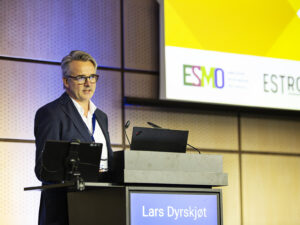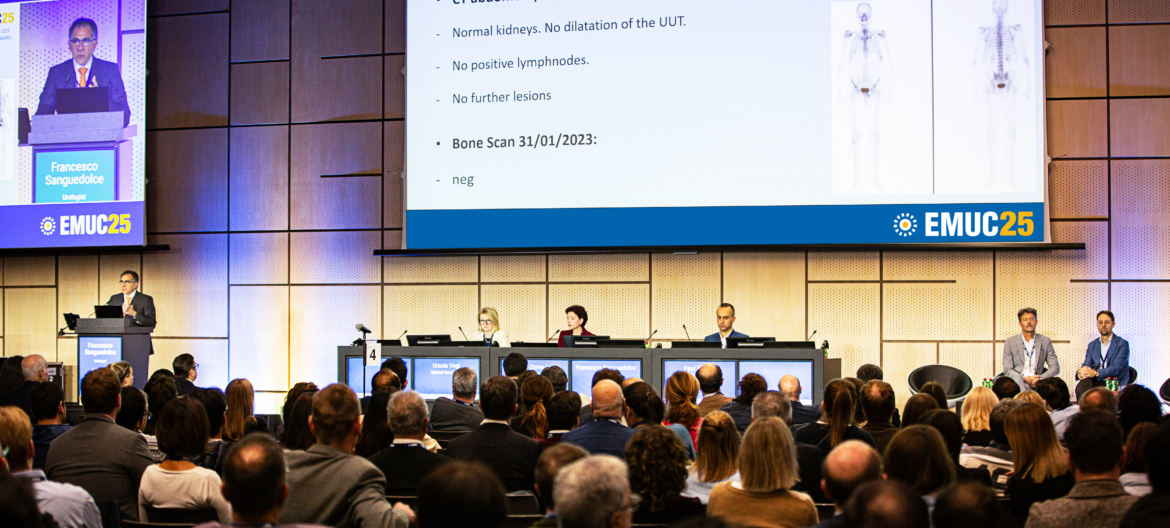
The 17th European Multidisciplinary Congress on Urological Cancers (EMUC25) delivered critical developments in the treatment and management of genitourinary (GU) cancers. Set in the historic Prague, the congress provided more than 1,400 delegates with crucial scientific updates and multidisciplinary insights, complemented with courses and hands-on training.
EMUC25 was led by Steering Committee Members: Dr. Elena Castro representing the European Society for Medical Oncology (ESMO), Dr. Alison Tree representing the European SocieTy for Radiotherapy and Oncology (ESTRO), and EAU Secretary General, Prof. Arnulf Stenzl.
Read on for some of the key takeaways of the congress.
On pathology
Prof. Maurizio Colecchia (IT) presented the pathology highlights of EMUC25. He cited the key messages from Prof. Gladell Paner’s (US) presentation “Renaming Grade Group 1 PCa from a pathology perspective” during the session of the EAU Sections for Uropathology and Urological Research “Controversial issues in urological pathology: A multidisciplinary approach”.
Prof. Colecchia also discussed the pros and cons of removing the cancer label in GG1 PCa. The benefits were resected GG1 has uniformly favourable behaviour. It is unable to metastasise, rarely extends out of prostate. The subset of GG1 will not progress for many years even without active surveillance (AS). Prof. Colecchia mentioned disadvantages such as the histological and molecular features of cancer in the majority of GG1 cancers, and the undersampling in biopsy.
Prof. Colecchia also mentioned the paper “Genitourinary Pathology Society and International Society of Urological Pathology White Paper on Defining Indolent Prostate Cancer: Call for a Multidisciplinary Approach” by Shah, et al. where indolent PCA is defined as a low-volume, well-differentiated acinar neoplasm with invasive histologic features that do not spread outside the prostate but become symptomatic, or shorten a patient’s life if left untreated. Clinically insignificant PCa shows considerable overlap but does not necessarily mean the same entity. Biopsy alone is insufficient, and identification of indolent PCa requires a multidisciplinary approach.
According to Prof. Giorgio Gandaglia’s presentation, “Active surveillance in GG1 PCa”, mpMRI is not enough to avoid biopsies in active surveillance. The EAU Guidelines 2025 recommends mpMRI is necessary prior to AS selection and so are confirmatory biopsies.
In “New recommendation for pathologists”, by Prof. Arndt Hartmann discussed the classical histopathology as surrogate marker for benefit of immunotherapy. The European Medicines Agency (EMA) approved pembrolizumab as adjuvant treatment after curative kidney removal surgery. This is beneficial for PT2 RCC: Grade 4 or sarcomatoid and PT3/4 RCC: N0 and M0; pN + RCC; pM1 à R0.
Prof. Colecchia also discussed Prof. Hartman’s design of a custom kidney gene panel, from in-silico analysis to final gene selection which featured databases/literature such as COSMIC, TCGA, further literature; renal tumour cohort of 131 cases and previous gene panel analysis; and pathologist input/expertise where one can differentiate reasonable number of 46 genes.
The session also discussed the presentation “New recommendations for oncologists” by Dr. Giuseppe Luigi Banna (GB) which stated that adjuvant pembrolizumab is now recommended for patients at intermediate-high or high risk of recurrence as defined by the Keynote-564 study.
Other key takeaways from Dr. Banna’s presentation were:
- The definition of “risk” still needs harmonisation and validation to prevent overtreatment and serious and chronic immune-related toxicity in patients unlikely to benefit.
- Multidisciplinary collaboration between oncologists and pathologists is essential to refine risk assessment and ensure optimal patient selection.
- Tools such as the Leibovich score and emerging biomarkers (OD-L1, KIM-1, ctDNA) can help identify patients who may benefit from treatment intensification or tailored perioperative strategies.
- Integrating pathological insights with clinical decision-making will be key to advancing precision medicine in renal cancer.
“How good is AI in prostate biopsy?” by Dr. Geert Litjens (NL) reported the findings of the “Automated deep-learning system for Gleason grading of prostate cancer using biopsies: a diagnostic study” which involved 1 AI model and 18 pathologists. The paper showed the automated deep-learning system achieved a performance similar to pathologists for Gleason grading and could potentially contribute to PCa diagnosis.
In “miRNAs for testis cancer: From diagnosis to monitoring of disease”, Dr. João Lobo (PT), highlights miR-371a-3p as the leading biomarker in testicular germ cell tumours (TGCT), showing high sensitivity and specificity, while notably not detecting teratoma, which is an advantage in clinical practice. The biomarker can be useful in different clinical settings such as diagnosis, follow-up, recurrence detection, post-chemotherapy viable disease detection, and AS of stage I disease.
On urology
Dr. Gianluca Giannarini (IT) presented the key urological themes discussed at EMUC25. He stressed two major transversal topics: the rising global burden of GU malignancies and epidemiology, and the impact of advanced imaging.
He said that the burden of GU malignancies is steadily increasing worldwide. By 2050, three GU cancers will be amongst the top five most prevalent cancers globally, representing a doubling of current prevalence for prostate cancer. “We need effective and affordable screening and prevention strategies to face the demands of this tsunami of disease burden. We also need to implement sustainable diagnostic and treatment paradigms, including individualised risk assessment, optimisation of integrated local and systemic therapies, and investment in de-escalation strategies.”
He also noted that there needs to be increased attention to patient-centred outcomes and patient empowerment, value-based care, cost-effectiveness, environmental sustainability and equitable care.
Imaging
According to Dr. Giannarini, a challenge for the very short term is integrating the advanced imaging modalities wisely into diagnostic pathways. “Imaging will play an expanding role in guiding and personalising treatments to avoiding over- and undertreatment, but there are of course major challenges to the cost, access and reduced resources. The next frontier will be harnessing the power of imaging through introducing AI algorithms in everyday clinical practice.”
Prostate cancer
The PRIME trial was presented by Prof. Veeru Kasivisvanathan (GB) as a potential new standard of PCa detection, contingent on high-quality execution and appropriate patient selection.
Other key points from Dr. Giannarini:
- While biomarkers are still an area of uncertainty, promising developments are anticipated soon
- Historical biopsies have been replaced by precision MRI-guided approaches
- Molecular imaging (PSMA PET) needs to be correctly interpreted to guide staging and treatment decisions
- The role of local treatment in advanced disease, including surgery, warrants evaluation in well-designed prospective RCTs
Bladder cancer (NMIBC)
Dr. Giannarini noted that the plenary session reviewed promising novel therapies with the potential to challenge the current standard of care (SOC). However, the multidisciplinary discussions also highlighted important concerns regarding cost, toxicity, and accessibility.
Other key points:
- Key trials for high-risk treatment-naive NMIBC were presented (POTOMAC, CREST), and multidisciplinary discussions re-affirmed BCG is still pivotal
- For recurrence post-BCG, Prof. Ashish Kamat (US) presented data showing that radical cystectomy still remains the most cost-effective, provided patients are carefully selected.
- Prof. Carmen Jeronimo (PT) presented promising data on urinary biomarkers for NMIBC monitoring, though they are not yet ready for routine clinical use yet
MIBC
The value of bladder-sparing treatments is gaining increasing attention; however, they are not suitable for all cases, and radical cystectomy remains an important step in the evolving therapeutical pathway for many patients. According to Dr. Giannarini, there is an urgent need for optimisation of neoadjuvant and adjuvant systemic treatments, as well as consolidation strategies in locally advanced disease.
Other key points:
- Prof. Lars Dyrskjøt (DK) presented results showing ctDNA can be used for guiding adjuvant therapy after radical cystectomy, but not pre-cystectomy.
- There are evolving scenarios for oligometastatic bladder cancer (mainly cN1), integrating local treatment with novel systemic therapies is a developing area, but robust trial data are lacking due to underrepresentation of these patients.
Kidney cancer
“For characterising small renal masses (SRMs), unfortunately we don’t have any good biomarkers. The role for imaging is so important (and possibly replacing biopsy) for diagnosis, as well as surgical planning for localised disease, and image-guided therapy for locally advanced tumours.”
He noted the presentation by Dr. Maria Isabel Galante Romo (ES) on the ARENAL trial, which showed real world evidence of adjuvant pembrolizumab in high-risk patients. Dr. Giannarini emphasised the importance of multidisciplinary efforts to identify optimal candidates on a case-by-case basis.
Other key points:
- A multidisciplinary discussion on oligoprogressive disease highlighted the growing role of metastasis-directed therapy, leading to greater use of SBRT, and a likely decline in surgery. This approach offers the advantage of sparing a new line of systemic treatment.
- For metastatic disease in the immunotherapy (IO) era, data presented that the rate of upfront cytoreductive nephrectomy is decreasing, whereas deferred cytoreductive nephrectomy is becoming a more common approach.
- Dr. Giannarini emphasised the importance of balancing intensification with de-intensification strategies, such as surgery, monotherapy and treatment holiday.
On medical oncology
On PCa, Dr. Pasquale Rescigno (GB) discussed a recommendation of the EMBARK trial which was “to offer enzalutamide with or without androgen deprivation therapy (ADT) to M0 patients with a high-risk biochemical recurrence (BCR), defined as a PSA doubling time of ≤ 9 months and a PSA level of ≥ 2mg/mL above nadir after radiation therapy or ≥ 1ng/m after radical prostatectomy with or without postoperative radiation therapy.”
In addition, he mentioned observations made during the five-year follow-up which included that the EMBARK data support enzalutamide plus ADT as the standard of care for patients with high-risk BCR, but not for enzalutamide and monotherapy. Dr. Rescigno stated, “Sometimes in oncology, waiting is the solution.”
Dr. Rescigno also discussed the AMPLITUDE trial, which met its primary endpoint of improved radiological progression-free survival (rPFS). It demonstrated the efficacy of combining a PARPi (niraparib) with an ARPI (AAP) in metastatic castration sensitive prostate cancer (mCSPC) patients with homologous recombination repair (HRR) alterations. He said, “However, when we look at the data, the patients who benefit the most from this combination are the patients with BRCA mutations.”
The CAPItello-281 trial showed that median rPFS was 25.7 months in the placebo arm of CAPItello-281 versus 33 months in the LATITUDE study suggesting poor response to ARPI in mHSPC setting for the PTEN loss population. “The trial used a cutoff of 90% for the loss of PTEN, the benefit in overall survival (OS) was not reached. However, when they look at the cutoff at 100%, then we see that the benefit is more profound. Is this precision medicine? Should we refine our biomarker selection?,” stated Dr. Rescigno.
The PSMAddition trial demonstrated the efficacy of Lu-PSMA-617 in combination with ADT and ARPI in mHSPC. The study showed rPFS benefit but there is no improvement in OS and lower quality of life (QoL) to date. “Again, is this precision medicine? Do we need to redefine the patient who will benefit the most from this treatment?”
Bladder cancer
The CREST trial showed the significant event-free survival (EFS) benefit with sasanlimab + Bacillus Calmette-Guérin (BCG) induction and maintenance versus BCG induction and maintenance alone.
Regarding the POTOMAC trial, Dr. Rescigno stated, “We need to carefully read the subgroup analysis. There is always a lot of effort in trying to analyse a subgroup but these are, most of the time, not preplanned and pre-specified analyses. For example, when we look at the subgroup analysis from the trial with durvalumab with BCG, the patients who seem to benefit the most are patients who smoke. We should be careful when we analyse the data.”
Testicular cancer
Dr. Rescigno also discussed Abstract 5 “Treatment with Oxaliplatin or Cisplatin in combination with Gemcitabine ± Paclitaxel for platinum-resistant Germ Cell Cancer: Results from a multi-institutional retrospective study”, which concluded that “Patients with multiply relapsed germ cell tumours face a poor prognosis with survival limited to a few months. Triplet combinations achieve the highest response rates, which may facilitate post-chemotherapy residual mass resection. There is an unmet need for novel therapeutic approaches to improve outcomes. The findings provided real-world benchmarks against which the efficacy of emerging treatments should be evaluated.
On radiation oncology
“Is less really more when we treat localised disease?” was the central theme highlighted by Dr. Paul Sargos (FR) in his presentation of the radiation oncology take-home messages at EMUC25. He illustrated the challenges and implications for patient care by drawing on PCa and bladder cancer (BCa) research, with a particular focus on GU toxicity data, QoL, and cost effectiveness.
Firstly, Dr. Sargos outlined the evolution of SBRT treatment duration for PCa where 10 years ago protocols required 39 fractions (fx), which were later reduced to 20fx. Today standard practice often involves just 5fx, and emerging evidence presented by Prof. Thomas Zilli (CH) suggested that 1fx may be sufficient (ONE SHOT – single shot radiotherapy for localised prostate cancer: primary endpoint results of a single arm, multicentre, prospective phase I/II trial).
He cited the updated PACE-B trial, presented by Dr. Nicholas Van As (GB), which compared conventional radiotherapy (RT) 62Gy in 20fx, or 78Gy in 39fx (delivered over 4 or 8 weeks), to SBRT regimens of 36.25Gy in 5fx over 1-2 weeks. He noted, “It was a positive trial, and we know we have a really efficient treatment, but what can we do better?” He questions the notion of ‘acceptable toxicity’, pointing out that this benchmark is often defined from the physician’s perspective rather than the patient’s lived experience. For example, in the study by Van As et al., 26.9% of patients reported grade 2 or more genitourinary RTOG toxicity. Dr. Sargos stressed that this can be significant for a patient’s QoL.
Dr. Sargos also referenced the PACE-C trial (Tree et al. 2025), which demonstrated that SBRT can be delivered in 5fx for intermediate-risk T2 disease. However, he cautioned that whether this approach is equally suitable for high-risk patients remains uncertain, given the need to balance efficacy and toxicity concerns. “Despite the accelerated treatment schedule, SBRT and moderately hypofractionated radiotherapy (MHRT) showed similar rates of early genitourinary RTOG toxicity.”
He stressed that these findings are not trivial, “we need to work on this”, reiterating the point that ‘less must be more’. He highlighted the paper “Reducing adverse effects in hypofractionated radiotherapy for prostate cancer: Clinical evidence and emerging mitigation strategies” (Le Guevelou et al.), which is under review. This work will outline different strategies supported by clinical evidence, to mitigate the clinically significant side-effects of hypofractionated therapy. The paper is particularly focused on improving the QoL for patients undergoing radiation treatment.
According to Dr. Sargos, there was extensive discussion on novel intravesical treatments for NMIBC patients, particularly those who are BCG-refractory or high-risk. “All of them have controversial results, but the same conclusion: the drugs are really expensive, and we need to address cost-effectiveness in this specific population.” In his opinion, from the perspective of radiation oncology, an already relatively inexpensive and efficient strategy exists for NMIBC and warrants renewed consideration.
He highlighted two upcoming trials that aim to reassess the role of radiotherapy in BCG-unresponsive NMIBC. The first is the TRAIN trial, a phase III randomised control clinical trial of radiotherapy with radiosensitisation vs. intravesical BCG therapy for high-risk NMIBC. Its primary endpoint will be event-free survival, directly comparing outcomes between BCG and radiotherapy with radiosensitisation.
The second trial is the EORTC GUCG-2335 (Achard et. al.), which will revisit the role of radiotherapy in BCG-unresponsible NMIBC with carcinoma in situ (CIS). This study will use whole bladder RT (55 Gy/20fx over 4 weeks) combined with radiosensitiser (choice between carbogen-nicotinamide, 5 FU-mitomycin, cisplatin, or gemcitabine). The primary outcome is complete response at 6 months, confirmed by mandatory biopsy.
Watch the complete presentation on EMUC25’s key takeaways here. To (re)view webcasts, abstracts, and other congress scientific content, explore the EMUC25 Resource Centre.
—-
Set to take place from 5 to 8 November 2026 in Brussels, Belgium, we look forward to welcoming you at the 18th European Multidisciplinary Congress on Urological Cancers (EMUC26)!